Understanding the 4Cs of Diamonds
Buying a diamond is one of the most significant purchases you will ever make. Whether you are searching for the perfect engagement ring or a timeless piece of fine jewelry, understanding the 4cs of diamonds is the ultimate key to finding the best value. The universal standard for grading and evaluating diamonds is known as the 4Cs: Cut, Clarity, Color, and Carat weight. Together, they describe the precise characteristics of a gemstone, allowing you to learn how to buy a diamond on a budget while balancing quality and beauty.
1. Cut: The Engine of Sparkle
Often considered the most crucial of the 4Cs, the cut is not about the shape (round, oval, emerald), but how masterfully the diamond has been faceted and polished. A well-cut diamond reflects light internally from one facet to another, dispersing it back through the top in a brilliant showcase of fire and scintillation. This is why cut is the engine of sparkle and the single most critical factor in a diamond’s visual impact.
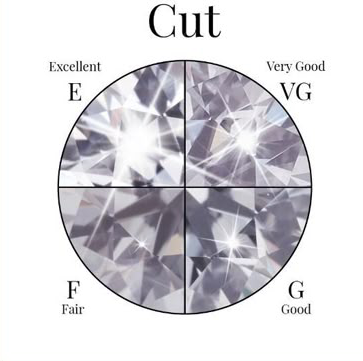
If you want the best diamond cut for sparkle, always look for GIA Triple Excellent ratings (Excellent Cut, Excellent Polish, and Excellent Symmetry). This ensures light does not leak out of the bottom or sides of the stone.
- Excellent: Maximum fire, brilliance, and scintillation. Almost all entering light is reflected back.
- Very Good: Reflects nearly as much light, offering wonderful brilliance at a slightly lower cost.
- Good & Fair: Allows light to leak through the sides or bottom, noticeably reducing sparkle.
Pro Tip:
Never compromise on the cut. Even a diamond with flawless clarity and colorless grade will look dull and lifeless if the cut is poor.
2. Clarity: The Fingerprint of Nature
Diamonds are formed deep within the earth under extreme heat and pressure. Because of this, almost all diamonds contain unique natural features called inclusions (internal flaws) and blemishes (external surface imperfections). Clarity grades measure the size, number, and visibility of these characteristics under 10x magnification, helping you find the best diamond clarity for value.
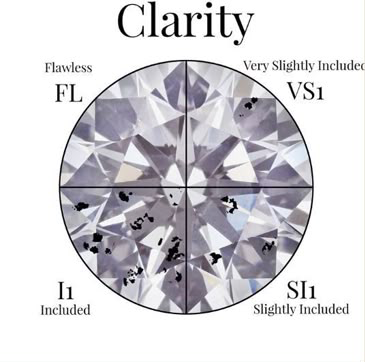
A common question buyers ask is: what is an eye clean diamond? An eye-clean diamond is a stone that has slight inclusions under microscopic magnification, but appears perfectly flawless to the naked eye when viewed from a normal distance.
- FL & IF (Flawless / Internally Flawless): No blemishes or inclusions visible under magnification.
- VVS1 & VVS2 (Very, Very Slightly Included): Inclusions so tiny that they are extremely difficult to locate.
- VS1 & VS2 (Very Slightly Included): Minor inclusions invisible to the naked eye. Excellent value.
- SI1 & SI2 (Slightly Included): Noticeable inclusions under magnification, and occasionally to the naked eye.
Pro Tip:
Look for “eye-clean” diamonds in the VS2 or SI1 range. They appear perfectly flawless to the naked eye, allowing you to allocate budget to a larger carat size or better cut grade.
3. Color: The Ice Factor
The GIA color grading system measures the absence of color in a diamond. The scale ranges from D (completely colorless, resembling a drop of pure water) to Z (light yellow or brown tint). Colorless stones are exceedingly rare and highly valued.
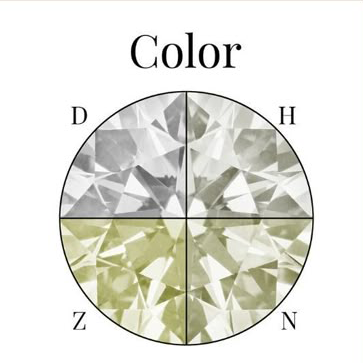
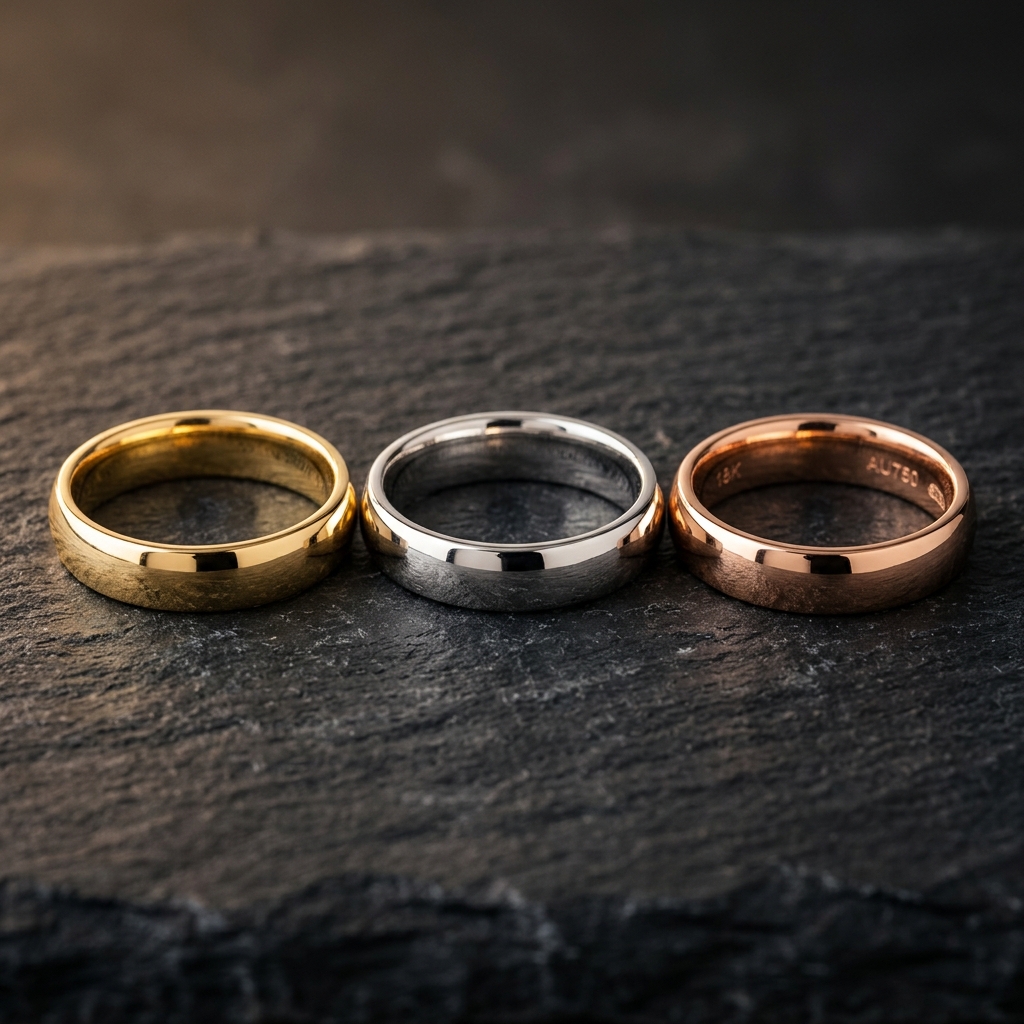
Setting choice is key here. For instance, the best diamond color yellow gold setting is often in the I-J range (or even K), because the yellow gold metal naturally masks the warm yellow tint of the diamond. Conversely, white gold or platinum settings demand a colorless or near-colorless grade (D-H) to avoid showing color contrast.
- Colorless (D-F): Icy white. Rarest and highly sought after.
- Near Colorless (G-H): Excellent value. Virtually indistinguishable from colorless unless placed side-by-side with a D grade.
- Faint Tint (I-J): Shows a very warm undertone, which can look beautiful depending on the setting.
Pro Tip:
For white gold or platinum settings, go G-H. For yellow or rose gold settings, I-J works beautifully as the metal naturally masks the warmth in the stone!
4. Carat: Size vs. Smart
Carat refers specifically to the weight of the diamond, not its physical dimensions. One carat is equal to 0.2 grams. Because larger diamonds are rare in nature, the price of a diamond increases exponentially as carat weight rises. Knowing this is key when learning how to buy a diamond on a budget.
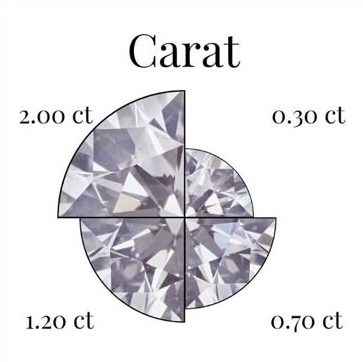
It is important to remember that cut also dictates visual size: a shallow, poorly cut diamond may look larger face-up but will lack brilliance, while an ideally cut diamond maximizes both light reflection and correct visual spread.
Pro Tip:
Consider buying slightly below popular weight thresholds (e.g., 0.90 carat instead of a full 1.00 carat). The visual size difference is imperceptible, but the price drop is significant!
Quick Cheat Sheet: What to Remember
- Cut: Sparkle > everything else. Never compromise on this grade!
- Clarity: VS2/SI1 = eye-clean. Save money by choosing these grades.
- Color: G-H for solitaire settings, I-J works perfectly in paved or yellow gold jewelry.
- Carat: Prioritize cut over size. A smaller, fiery diamond always outshines a dull, larger rock!
The Final Word
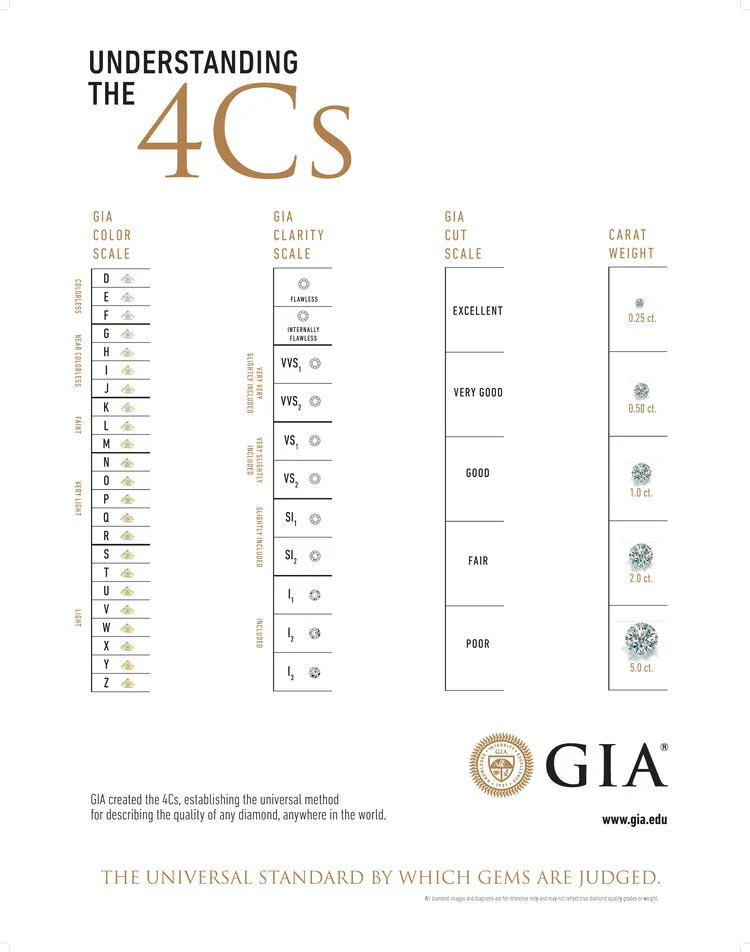
The 4Cs work together like a recipe. A diamond with a great cut, good color, and smart clarity will outshine a poorly cut “perfect” stone. When selecting your diamond, always ask for an independent GIA Certificate—it is your gemstone’s official report card, guaranteeing the authenticity and quality of your investment.
Beyond their timeless beauty and elegance, GIA certified loose diamonds offer enduring value and a wise investment for the future. May your life be adorned with the sparkle of timeless brilliance.