• Beyond the Price War: How Nepali Jewellers Can Build Brands That Customers Are Willing to Pay More For
    Beyond the Price War: How Nepali Jewellers Can Build Brands That Customers Are Willing to Pay More For

    Beyond the Price War: How Nepali Jewellers Can Build Brands That Customers Are Willing to Pay More For

    By Sulav Sharan K.C. | GIA Gemologist

    An industry perspective on jewellery branding, customer psychology, global luxury houses, and the future of jewellery retail in Nepal.

    Introduction: The Most Expensive Mistake in Jewellery Retail

    Imagine two jewellers selling a similar diamond ring. Both use the same gold purity, comparable diamonds, and similar manufacturing techniques. One offers a lower price. The other charges more.

    In a market where customers are trained to compare quotations, the cheaper jeweller often wins the immediate sale. But what happens when the customer returns? Will they come back because they trust the jeweller, value the experience, appreciate the design, and believe in the quality? Or will they simply visit whoever offers a lower price next time? This is the fundamental challenge facing jewellery retailers in Nepal today. Our industry has tremendous strengths: generations of jewellery knowledge, skilled artisans, deep cultural significance, and customers who consider jewellery an essential part of weddings, festivals, family milestones, and wealth preservation.

    Yet much of the market still competes on a narrow equation: Gold rate + making charge + a little negotiation = selling price.

    When this becomes the primary basis of competition, the jeweller gradually loses the ability to differentiate. Margins shrink, staff spend more time negotiating than advising, and customers become increasingly price-sensitive. The answer is not to ignore price. Gold rates matter. Customers deserve transparency, and affordability will always be important in Nepal. The answer is to stop making price the only reason to buy. The world’s most successful jewellery houses demonstrate that jewellery can represent identity, heritage, design, trust, aspiration, and emotion—not merely the value of its raw materials.

    Nepali jewellers can learn from these businesses without copying their expensive boutiques or trying to become international luxury brands overnight. The opportunity is to apply their principles to our own market, culture, and customers.

    1. Why do customers pay more than the value of gold and labour?

    Consider a diamond ring. Its underlying material value can be estimated using its gold weight and purity, the characteristics and value of its diamonds, and the cost of manufacturing. But a customer does not experience a ring as a collection of inputs. They may experience it as an engagement, a wedding promise, a gift from a parent, a reward for personal achievement, or an object they hope to pass down to their children. That difference between material cost and perceived value is where a brand earns the right to charge a premium. There are six major reasons customers pay more.

    A. They buy meaning, not just materials

    A ring purchased for an engagement carries a different meaning from a ring purchased simply because its gold weight is attractive. The product may be physically similar, but its emotional significance is different. Global jewellery houses understand this distinction. Their campaigns often focus on love, relationships, personal milestones, and identity rather than presenting a product as a list of grams and specifications. For Nepali jewellers, this is especially relevant. Weddings, engagements, anniversaries, birthdays, and family celebrations already provide powerful emotional contexts. Instead of communicating only, “22K gold necklace, 20 grams,” a jeweller can explain who the design is intended for, the occasion it celebrates, the inspiration behind it, and why it is worth keeping for generations. The product remains the same. The meaning becomes richer.

    B. Customers pay for confidence

    Jewellery is a high-trust purchase. Buyers may worry about purity, diamond authenticity, stone quality, workmanship, after-sales service, and whether they are receiving fair value. A trusted jeweller reduces these concerns. That trust must be earned through visible evidence: transparent invoices, accurate weights, clear disclosure of gold purity, appropriate diamond documentation, honest explanations of natural versus laboratory-grown diamonds, and dependable after-sales policies. KPMG India’s 2025 fine-jewellery customer-experience research identifies trust, clear product information, consistent quality, authenticity, and customer experience as important factors influencing willingness to pay a premium. Its findings offer a useful regional reference, although they should not be treated as a direct measurement of every Nepali consumer.

    The lesson is straightforward: trust is not a slogan printed on a jewellery box. It is a system the customer experiences at every stage of the purchase.

    C. They pay for distinctive design

    When every store sells nearly identical products, the customer naturally compares prices. Distinctive design changes that comparison. A recognisable collection gives customers a reason to ask for a particular design rather than simply asking for the lowest price on a particular weight of gold. This is one of the strengths of internationally recognised jewellery houses. Their signatures become recognisable through shape, proportion, motifs, repeated design codes, and consistent presentation. Nepali jewellers have an opportunity to build equally meaningful design identities around contemporary Nepali tastes, Newari artistry, traditional motifs, modern bridal jewellery, and lightweight everyday diamond pieces.

    The objective is not to make every design expensive. It is to make the design recognisable and relevant.

    D. They pay for the experience

    Luxury is also created through how a customer is treated. Consider the difference between a rushed transaction and a carefully guided consultation. In the second experience, the jeweller understands the occasion, asks about the customer’s preferences, explains the choices, presents suitable options, and provides confidence without pressure. The experience may include elegant packaging, thoughtful follow-up, private appointments, cleaning and maintenance guidance, and a reliable response if something goes wrong. These elements do not require every Nepali retailer to invest in a luxury showroom. They require attention, consistency, and a clear service standard.

    E. They pay for reputation and social recognition

    Customers often feel more confident purchasing from a brand they know, a business recommended by their family, or a jeweller whose reputation has been built over many years. A strong reputation reduces uncertainty. A recognisable design can also become a social signal: the customer is choosing something that reflects their taste and identity. However, recognition cannot be manufactured through advertising alone. Marketing may attract attention, but consistent quality and service must sustain it.

    F. They pay for continuity and peace of mind

    Jewellery is often kept for decades. Buyers want to know that the seller will still be available if they need resizing, cleaning, repairs, documentation, or guidance later. A dependable jeweller can create long-term value through these services. The customer is not only buying today’s ring or necklace. They are also choosing whom they trust to help look after it in the future. The commercial lesson: materials establish a product’s foundation. Design, trust, meaning, experience, reputation, and service can establish its additional value.

    These factors do not guarantee that every customer will pay more. They give the right customer a compelling reason to choose you even when a cheaper alternative exists.

    1. Why does the Nepali jewellery market become trapped in price competition?

    Price competition is not necessarily a sign that customers do not value quality. It often reflects how the market presents and compares products. Several structural issues can reinforce the cycle.

    First, many products look interchangeable. When customers see similar designs in multiple stores, they have little visible reason to choose one retailer over another.

    Second, the sales conversation begins with price. If the first question is always “How much is the making charge?”, the conversation rarely progresses to craftsmanship, design, suitability, certification, or service.

    Third, retailers may lack a clear identity. A store that sells everything to everyone can struggle to become known for anything in particular.

    Fourth, value is often invisible. A jeweller may offer better finishing, careful stone setting, reliable documentation, or superior service but fail to explain those advantages in a way the customer understands.

    Fifth, discounting becomes a habit. Once customers learn that the first quotation is negotiable, they may stop treating it as a meaningful reflection of the product’s value. There is also a commercial reality: when a large proportion of the selling price is tied to gold, retailers may have limited room to absorb discounts without damaging profitability. The exact impact depends on the product, inventory model, labour costs, and business structure.

    The solution is not to refuse every negotiation. It is to build enough differentiation that the negotiation no longer determines the entire sale.

    1. How global jewellery houses create value beyond materials

    The following brands demonstrate different approaches to creating customer preference. Each has its own history, product strategy, and business model. Nepali jewellers should learn from their principles rather than attempt to reproduce their scale.

    Cartier: Build iconic products

    Cartier’s strength includes recognisable design signatures and enduring collections. The Love collection is an example of a design identity that customers can associate with the brand.

    The lesson for a Nepali jeweller is to develop a signature collection rather than depend entirely on a catalogue of unrelated designs. A signature collection should have recognisable characteristics, consistent quality, a clear target customer, and a story that staff can explain.

    Tiffany & Co.: Make the brand experience recognisable

    Tiffany combines distinctive product lines with a carefully managed brand identity and retail experience. Its blue packaging is one of the world’s most recognisable luxury-brand assets.

    The broader lesson is consistency. The product, packaging, store, photography, customer communication, and after-sales service should all reinforce the same promise. A Nepali retailer does not need a famous blue box. It needs a recognisable and consistent identity of its own.

    Bulgari: Develop a bold design language

    Bulgari is known for expressive design, distinctive colour combinations, and a strong visual identity.

    The lesson is that a brand does not need to appeal to everyone. A clear design personality can help customers recognise and actively seek out its products. Nepali retailers can explore distinctive bridal collections, contemporary coloured-stone designs, heritage-inspired pieces, or modern everyday jewellery rather than competing on generic designs alone.

    Van Cleef & Arpels: Turn inspiration into a signature

    Van Cleef & Arpels is associated with intricate craftsmanship, poetic themes, and recognisable design signatures such as the Alhambra collection.

    The lesson is to connect design with a coherent source of inspiration. A collection built around a meaningful theme is easier to present, market, photograph, and remember than a random assortment of products. Nepal’s architecture, art, nature, and cultural heritage offer potential sources of inspiration, provided designs are developed thoughtfully and respectfully.

    Harry Winston: Lead with exceptional stones

    Harry Winston has built a strong identity around exceptional diamonds and high jewellery.

    Its example highlights the importance of expertise, stone selection, presentation, and confidence in explaining why one diamond differs from another. For Nepali jewellers, gemological knowledge can become a real competitive advantage. Customers who understand the differences in diamond quality, certification, proportions, and overall appearance are better equipped to make informed choices.

    Graff: Make product excellence central to the story

    Graff is associated with rare diamonds, exceptional stones, and high jewellery.

    Its positioning illustrates how product selection itself can become part of a brand’s identity. The lesson is not that every retailer needs rare diamonds. It is that a retailer should know what it does particularly well and make that strength central to its offer. For one jeweller, that may be carefully selected diamond solitaires. For another, it may be contemporary bridal jewellery, excellent finishing, or reliable everyday designs.

    1. What do the financial results of global jewellery groups tell us?

    Global luxury businesses provide useful evidence of the scale that strong brands can achieve. However, revenue should not be mistaken for profit, and group revenue should not be presented as the sales of a single jewellery brand.

    The latest reported figures below illustrate the size of the broader businesses behind several internationally recognised jewellery houses.

    Business Reported revenue or sales Reporting period
    Richemont’s Jewellery Maisons, including Cartier and Van Cleef & Arpels €16.54 billion FY2026
    LVMH Watches & Jewelry business group, including Tiffany & Co. and Bulgari €10.49 billion Calendar 2025

    Richemont reported jewellery sales of €16.54 billion for the financial year ended March 2026, up 8% at actual exchange rates. Its Jewellery Maisons segment also reported an operating result of €5.04 billion. These figures cover four Maisons—Buccellati, Cartier, Van Cleef & Arpels, and Vhernier—not Cartier alone. Richemont’s FY2026 results⁠

    LVMH reported €10.49 billion in 2025 revenue for its Watches & Jewelry business group, with €1.51 billion in profit from recurring operations. This is a multi-brand segment that includes watches as well as jewellery; it is not Tiffany & Co.’s standalone turnover. LVMH’s 2025 financial results⁠

    These figures are impressive, but they do not prove that branding alone caused the results. The businesses also benefit from international distribution, established manufacturing capabilities, large marketing investments, extensive retail networks, and decades or centuries of accumulated brand equity. Their relevance to Nepal lies in a more practical observation: leading groups continue to invest in iconic products, craftsmanship, distribution, and brand desirability. They do not treat the product’s material value as the entirety of its commercial value.

    For a Nepali retailer, the useful question is not, “How can my shop achieve millions in revenue?” It is, “What repeatable practices help customers recognise my business, trust it, and return to it?” That is a question a smaller business can begin answering today.

    1. What can Nepali jewellers learn without copying the luxury price tag?

    The most important lesson is that brand-building does not begin with charging more. It begins with delivering a clear reason to choose you. A retailer cannot sustainably command a premium merely by changing its packaging or raising its making charge. The product and experience must justify the promise. Nor should a jeweller try to position every product as luxury. Nepal has customers across different budgets, and accessible jewellery can be an excellent business when the offer is clear and the margins are sustainable.

    Instead, consider three questions:

    • What should our business be known for? Choose a recognisable strength, such as trusted diamond expertise, contemporary bridal design, distinctive Nepali-inspired jewellery, or dependable after-sales service.
    • What evidence supports our promise? Show accurate product information, transparent pricing, consistent finishing, clear documentation, and service standards.
    • Why should customers return? Build relationships, maintain contact appropriately, support jewellery care, and give customers confidence that their next purchase will meet the same standard.

    These questions move the business away from the narrow question of whether the competitor will offer a lower price.

    1. A practical three-step guide to rising above the price war in Nepal

    Here is how I would advise a Nepali jewellery retailer to begin applying these lessons.

    Step 1: Own a position in the customer’s mind

    Do not try to be the cheapest jeweller for every customer. Decide what you want to be known for.

    Examples include:

    • The trusted diamond specialist.
    • The destination for contemporary bridal jewellery.
    • The expert in lightweight, everyday diamond jewellery.
    • The jeweller known for distinctive Nepali-inspired designs.
    • The family jeweller offering dependable quality and long-term service.

    Choose one primary position that reflects your actual capabilities and your customers’ needs. Then build a focused collection around it. Select your best designs, give them collection names, photograph them consistently, and train your staff to explain their inspiration and distinguishing features. For example, instead of presenting twenty similar diamond rings, create a signature collection of ten rings with clear design differences, documented specifications, and a consistent visual identity.

    Your first objective is recognition. When customers think about a particular jewellery need, you want your business to come to mind.

    Step 2: Make your value visible and your trust measurable

    A premium is easier to justify when the customer can see what makes the offer different.

    Develop a consistent customer experience that includes:

    • Transparent gold purity, weight, and pricing.
    • Clear explanations of diamond characteristics and certification where applicable.
    • Consistent finishing, stone setting, and quality checks.
    • Attractive, professional packaging.
    • Written after-sales, repair, cleaning, and resizing policies.
    • A customer database and appropriate follow-up after purchases.

    Train your sales team to ask questions before quoting a price.

    Instead of immediately asking, “What is your budget?”, they might begin with:

    • “Are you looking for something for a special occasion or for everyday use?”
    • “What kind of design do you normally prefer?”
    • “Would you like me to explain the difference between these two options?”

    This changes the conversation from price negotiation to informed selection. It also helps the retailer recommend products that genuinely suit the customer rather than relying on discounts to close the sale.

    Step 3: Build a brand, not just a shop

    Your brand is the promise customers associate with your business. It must be repeated consistently through your products, people, communication, and service.

    Start with a simple 90-day programme.

    Days 1–30: Define your identity

    Select your target customer, identify your signature category, choose your strongest designs, and write a clear brand promise. Review your pricing and profitability so you know which products can support your business sustainably.

    Days 31–60: Communicate your value

    Create professional product photography, short educational videos, design stories, and customer-care content. Train staff to communicate product differences confidently. Keep your presentation consistent across your showroom and digital channels.

    Days 61–90: Measure what works

    Track gross margin, average transaction value, conversion rate, repeat purchases, referrals, and sales of your signature collection. Compare results against your starting position and refine the offer based on actual customer behaviour. Do not judge the programme by social media followers alone. A smaller audience that trusts your expertise and becomes paying customers may be more valuable than a large audience that only responds to discounts. Likewise, a higher selling price is not automatically a better result. Track gross profit per sale, stock turnover, customer satisfaction, and repeat business together.

    The objective is to build a business that earns healthy margins while giving customers genuine value.

    1. The role of the manufacturer: Helping retailers escape the price war

    The responsibility does not belong to retailers alone. Jewellery manufacturers and suppliers can either reinforce price competition or help their retail partners build stronger businesses. When manufacturers offer only products and quotations, retailers are left to compete on whatever differences remain—often price. A better manufacturing partner provides more than inventory. It helps retailers develop collections, understand market demand, maintain consistent quality, access useful product information, and communicate designs effectively.

    For example, a manufacturer can support its retail partners with:

    • Monthly catalogues of commercially relevant designs, including weights and product specifications.
    • Distinctive collections tailored to different customer segments.
    • Consistent quality-control procedures and transparent product documentation.
    • Product photographs and educational material for digital marketing.
    • Sales training that explains design, workmanship, and product differentiation.
    • Reliable supply and responsive support when a retailer needs assistance.

    This is particularly relevant in Nepal, where retailers need to balance cultural preferences, changing fashion, affordability, working capital, and customer trust. The strongest manufacturer–retailer relationship is not simply the one that produces the lowest quotation. It is the one that helps both businesses serve customers better and grow sustainably.

    At Rashova Diamonds, this is the philosophy worth pursuing: helping Nepali jewellers compete through distinctive designs, dependable manufacturing, consistent quality, and long-term partnership—not price alone.

    Conclusion: Nepal does not need another race to the bottom

    The world’s leading jewellery houses did not build their reputations simply by calculating the gold and labour in a product and adding a margin. They developed distinctive design identities, invested in craftsmanship, created recognisable collections, communicated compelling stories, built customer confidence, and maintained consistent experiences across their businesses. These advantages were accumulated over time. They cannot be reproduced overnight, and they do not eliminate the importance of competitive pricing. But their underlying principles are accessible to Nepali jewellers.

    We have our own heritage, artistic traditions, skilled artisans, cultural occasions, and deep relationships between families and jewellery. We do not need to imitate the identity of Cartier, Tiffany & Co., Bulgari, or any other international house. We need to understand what makes these brands memorable and apply those lessons to our own strengths.

    A retailer can begin with one signature collection, one better customer consultation, one transparent quality process, and one consistent service promise. Over time, these actions can create something more valuable than a single sale: customer preference.

    My three closing principles are simple:

    • Differentiate your product. Give customers a clear reason to choose your designs.
    • Earn the premium. Make quality, transparency, trust, and service visible.
    • Build for the long term. Measure customer loyalty and profitability rather than relying on discounts to drive every sale.

    The future of Nepali jewellery retail should not be decided solely by who can quote the lowest price. It should also belong to the jewellers who understand their customers, create meaningful products, stand behind their promises, and build businesses people are proud to return to.

    Sulav Sharan K.C. is a GIA Gemologist and jewellery-industry professional. This article reflects a strategic perspective on jewellery retail, brand positioning, and the opportunities for Nepali jewellers to build lasting customer value.
  • Mastering the Art: Techniques for Cutting and Setting Diamonds

    Mastering the Art: Techniques for Cutting and Setting Diamonds
    image

    At the center of the diamond industry lies a realm of precision, skill, and artistry. Now, we invite you to explore the complex world of diamond cutting and setting. Providing a behind-the-scenes look at meticulous craftsmanship, we reveal the secrets of master craftsmen. From exploring diamond cutting techniques and their intricacies to advanced diamond setting techniques for unique designs, we offer insights into the artists who breathe life into these valuable gems.

    Behind-the-Scenes Look at the Art of Diamond Cutting

    The process of transforming a rough diamond into a brilliant work of art is a testament to the skill and expertise of diamond cutters. This section takes you behind the scenes, offering a glimpse into the art of diamond cutting.

    • From Rough to Radiant

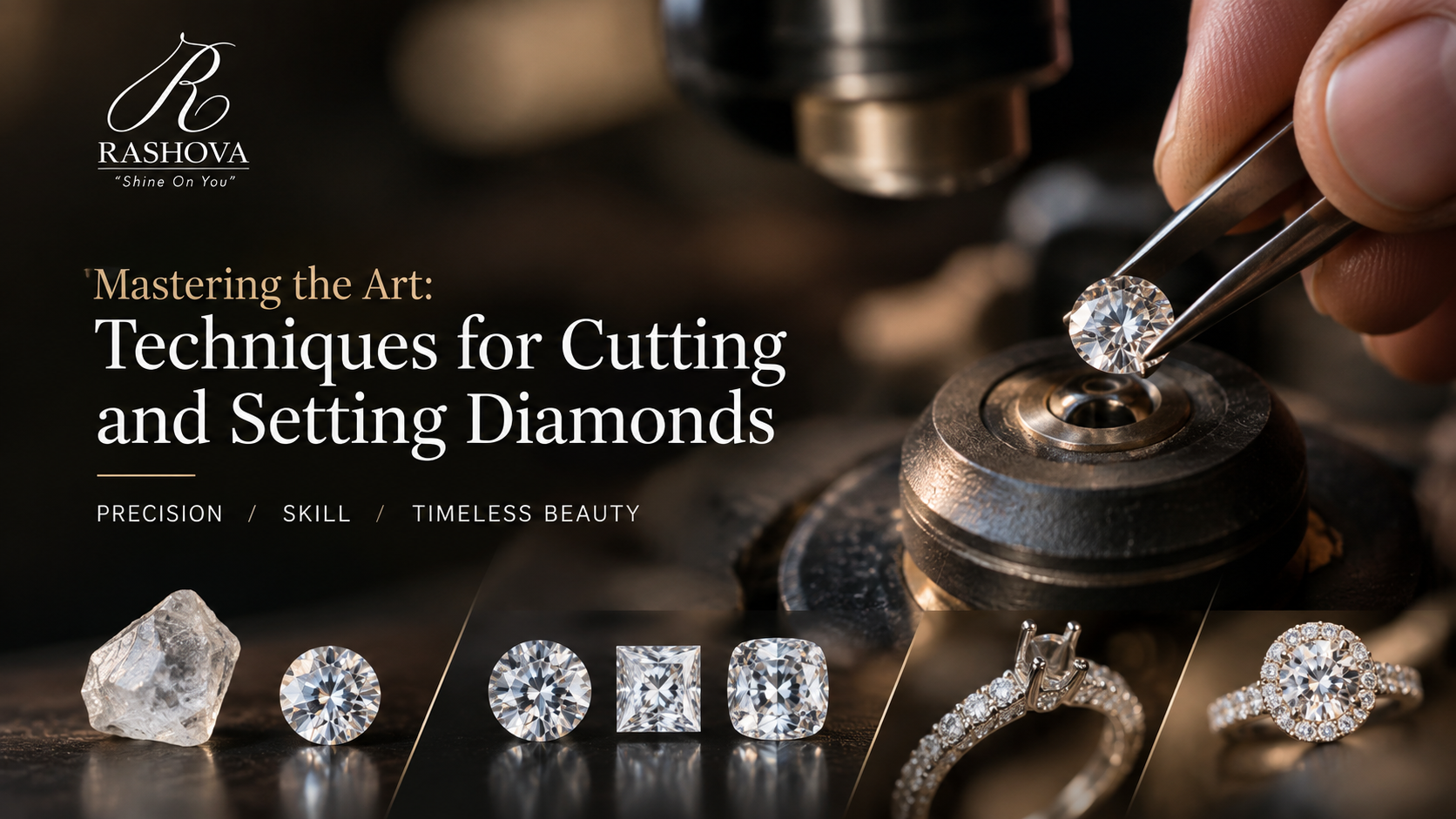
    The journey begins with the selection of a rough diamond, where it is analyzed by skilled craftsmen for its unique shape and characteristics. Through precise cuts, the features are strategically placed to mask inclusions and maximize brilliance, fire, and scintillation—the hallmarks of a well-cut diamond.

    • The Importance of Cut

    The cut of a diamond is of utmost importance and affects its overall appearance. To ensure optimal light performance, designers carefully determine the proportions, angles, and symmetry of the stones. From classic brilliant cuts to exquisite fancy shapes, each cut requires a subtle approach to bring out the diamond’s inherent brilliance.

    • Upcoming Trends in Diamond Cutting

    As technology evolves, so do diamond cutting techniques. This section explores emerging trends, from innovative cutting techniques that enhance a diamond’s fire to advances in laser-cutting technology that enable complex fabrication and customization.

    Showcasing Different Cutting Styles and Their Effects

    Dive into the kaleidoscope of different diamond cutting techniques, each creating a unique visual impact on the diamond. This section explores a variety of cuts and their mesmerizing effects.

    • Brilliant Cut Styles

    Look for classic brilliant cuts, including round, princess, and cushion cuts, known for their ability to maximize light reflection. Every aspiring jewelry customer can benefit from understanding the nuances of each style, from the timeless elegance of the round cut to the modern appeal of the princess cut.

    • Step Cuts and Asscher Cut

    Step cuts, exemplified by emerald and Asscher cuts, have rectangular sections that allow for a subtle play of light. This cut brings sophistication and classical charm to a diamond, creating an understated yet elegant look.

    • Fantasy and Hybrid Cuts

    Innovative cuts, often referred to as fantasy or hybrid cuts, push traditional boundaries. From the radiant cut’s combination of step and brilliant cuts to the unique patterns of hearts-and-arrows cuts, these styles cater to individuals seeking distinctive and unconventional designs.

    • Novelty Cuts

    Novelty cuts offer creative possibilities beyond traditional diamond shapes, allowing designers and craftsmen to explore unique forms and patterns.

    Exploring Advanced Setting Techniques for Unique Designs

    Setting a diamond is an art that goes beyond protecting it with metal—it requires creating a platform for the gemstone to shine. This section explores advanced diamond setting techniques that elevate jewelry design to new heights.

    • Invisible Setting

    In an invisible setting, diamonds are placed side by side without visible prongs to create a seamless, shining surface. This technique is often used in sophisticated designs, creating the appearance of a continuous flow of diamonds.

    • Pavé and Micro-Pavé Settings

    Pavé designs, where small diamonds are set closely together, create a beautiful glow. Micro-pavé takes this technique to the next level, using exquisite precision to set even smaller diamonds, resulting in a delicate yet inspiring look.

    • Bezel and Halo Designs

    The bezel setting encases the diamond in metal, providing protection and a modern aesthetic. Halos of small stones surrounding the central diamond enhance its visual presence. These settings are versatile and can complement various diamond shapes.

    Insights from Master Craftsmen

    We now gain a direct insight into the artisans who breathe life into diamonds. This section offers insights from master craftsmen, exploring their world, their passion for the craft, and the secrets behind their unique creations.

    • Craftsmanship as Art

    Master craftsmen share their thoughts on the intersection of craft and art. Understand the inspiration behind their designs, the challenges they overcome, and their passion for transforming raw materials into timeless works of art.

    • Evolution of Techniques

    Examine how diamond cutting and setting techniques have evolved over time. Experienced craftsmen talk about integrating technology, the impact of changing consumer preferences, and the constant pursuit of perfection in their craft.

    • Balancing Tradition and Innovation

    Artists are concerned with the delicate balance between respecting traditional techniques and embracing innovation. Learn how contemporary touches can be incorporated into timeless designs, ensuring every piece reflects both heritage and modernity.

    Conclusion

    In conclusion, we take an immersive journey into the mastery of diamond cutting and setting. From the precision cutting techniques that define diamond brilliance to the art of sophisticated settings that create unique designs, this chapter celebrates the skill and passion of master craftsmen.

    It reveals the secrets behind the craft and invites you to appreciate not only the beauty of the final product but also the artistry and craftsmanship that make each diamond a timeless masterpiece.

  • Rashova Diamonds | Jewellery Manufacturing Process

    Rashova Diamonds | Jewellery Manufacturing Process

    Rashova Diamonds

    Premium Jewellery Manufacturing in Nepal

    Rashova Diamonds is a leading diamond jewellery manufacturer in Nepal, specializing in high-quality 14K, 18K, and 22K gold jewellery for retailers, brands, and wholesalers. We combine advanced technology with skilled craftsmanship to produce precision-made diamond jewellery, custom bespoke pieces, and fine gold jewellery that meet strict international quality standards.

    Our 8-Step Jewellery Manufacturing Process

    Whether you need a single custom design or large-scale jewellery production, consistency is our top priority. Here is a look inside our meticulous production workflow.

    1 Planning & Product Development

    Every jewellery piece begins with careful planning. We consult with you to understand your design requirements, metal purity, diamond specifications, and production goals to ensure total accuracy from the very beginning.

    2 CAD (Computer-Aided Design)

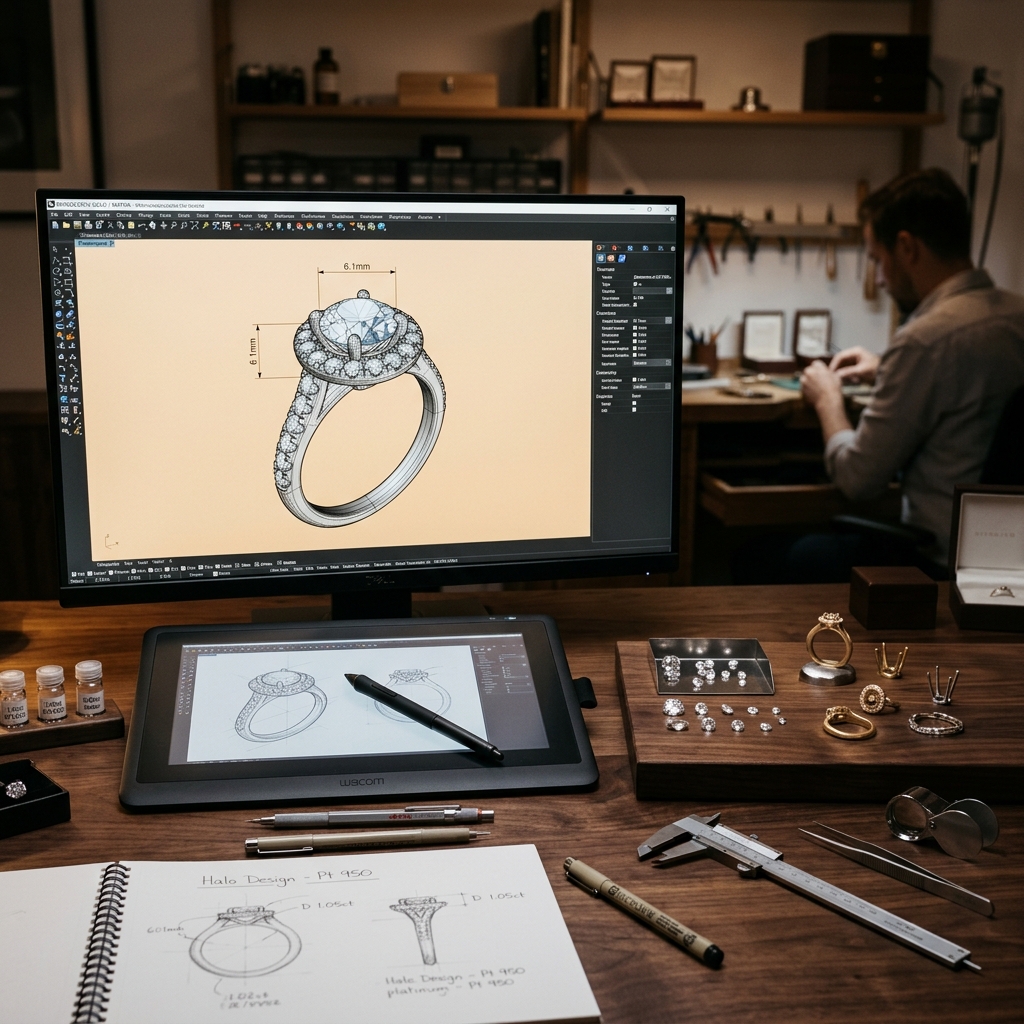
    Our expert designers create highly detailed 3D CAD models, allowing you to visualize and approve your jewellery before physical production starts. This ensures precision, faster development, and minimal design revisions.

    3 CAM & Wax Production

    Using advanced CAM technology and high-resolution 3D printers, we produce incredibly accurate wax models that capture every detail of the approved digital design, preparing it for flawless casting.

    4 Casting & Filing

    The wax model is cast into your choice of precious metal. Once cast, our artisans take over with expert filing, assembly, and hand-refinement to create a perfectly balanced and structurally sound jewellery piece.

    5 Diamond & Gemstone Setting

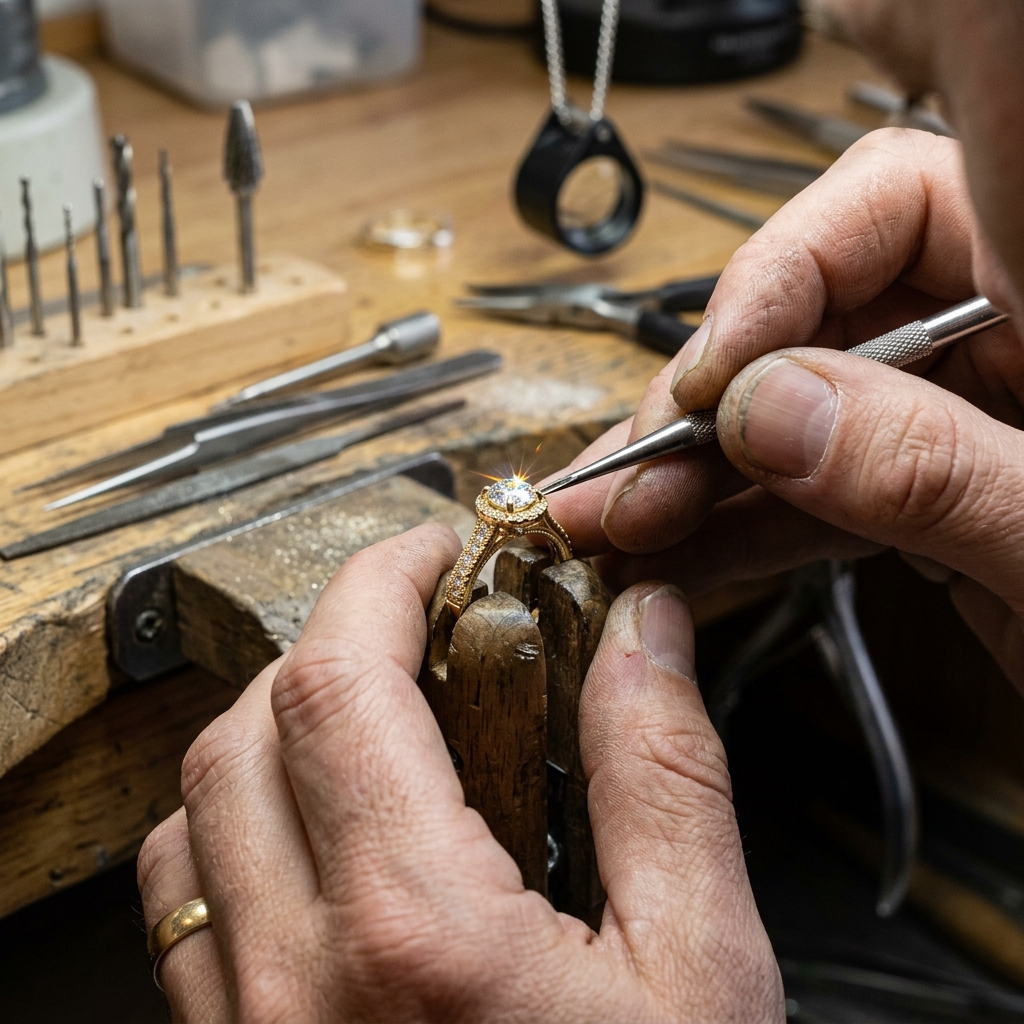
    Our experienced master craftsmen securely set natural diamonds, lab-grown diamonds, and precious gemstones with exceptional precision. We utilize advanced setting techniques under magnification to maximize brilliance and ensure long-term durability.

    6 Polishing & Rhodium Finishing

    Every piece undergoes multiple rigorous polishing stages to achieve a brilliant mirror finish. Our white gold jewellery receives premium rhodium plating for enhanced shine, superior protection, and long-lasting beauty.

    7 Quality Control (QC)

    Excellence is guaranteed through rigorous quality inspection. We thoroughly examine stone security, overall craftsmanship, exact dimensions, polish uniformity, and structural durability to ensure every product meets our strict standards.

    8 Secure Packaging & Dispatch

    Once unconditionally approved, each jewellery piece is professionally ultrasonically cleaned, securely packed, and carefully dispatched to ensure it reaches our retail partners in perfect, ready-to-sell condition.

    Why Choose Rashova Diamonds?

    • Leading diamond jewellery manufacturer in Nepal
    • Precision CAD/CAM jewellery manufacturing
    • Custom jewellery manufacturing for retailers
    • Natural and lab-grown diamond expertise
    • Strict quality control at every production stage
    • Fast turnaround and reliable delivery
    • Ethical sourcing and premium craftsmanship
    • Trusted B2B jewellery manufacturing partner
  • Why Partner with Rashova?

    Why Partner with Rashova?
    Wholesale & B2B Manufacturing

    Your Strength
    Is Selling.
    Ours Is Making.

    At Rashova, we understand that your strength lies in retail and customer relationships — not navigating the complexities of a factory floor. That’s why leading global retailers trust us to handle their bespoke and wholesale diamond jewelry production.

    Detailed view of a custom diamond ring during the B2B manufacturing process
    Expert jewelry craftsman working on a diamond piece at Rashova's facility

    Focus on Retail – Leave Manufacturing to Us

    Retail success comes from great client relationships and marketing, not managing factories. We handle the 3D CAD design, casting, and rigorous quality control, empowering you to concentrate entirely on sales and brand growth.

    No More Overstock Headaches

    In-house production often leads to bloated inventory. Our flexible, demand-driven wholesale manufacturing ensures you only receive fast-selling, modern jewelry — eliminating the financial risk of stockpiling unsold pieces.

    Scale Without Heavy Investment

    Avoid the exorbitant costs of specialized labor, high-tech machinery, and factory infrastructure. Partnering with Rashova gives you access to elite diamond jewelry manufacturing without the capital burden.

    Trusted Quality & Ethical Sourcing

    Backed by over 40 years of industry legacy, we are renowned for ethically sourced diamonds and responsibly crafted fine jewelry. Offer your customers pristine products they can wear with absolute trust.

    Always On-Trend Collections

    Our in-house design team and gemologists constantly monitor global luxury trends. We provide fresh, stylish jewelry collections that ensure your showcases remain highly competitive, season after season.

    Seamless, Stress-Free Operations

    Say goodbye to production delays and inconsistent finishing. Our transparent, end-to-end manufacturing process guarantees strict quality checks, timely B2B deliveries, and zero operational friction.

    Pure B2B — No Competition

    We are strictly a manufacturer, not a consumer-facing retailer. As your dedicated B2B partner, we never compete for your customers. Our sole objective is providing the high-quality inventory that scales your brand.

    What You Get with Rashova

    Everything you need to run a high-performing jewelry retail business — delivered by a manufacturer whose only goal is your long-term success.

    Zero Competition Guarantee

    We are your silent production partner, completely devoted to wholesale and bespoke B2B accounts. We never sell direct-to-consumer.

    Reliable Supply Chain

    Enjoy expedited, secure delivery of highly demanded designs exactly when your inventory requires restocking.

    Ethical & Flawless Production

    From conflict-free diamond sourcing to master setting and rhodium polishing, our craftsmanship exceeds elite industry standards.

    Retail-First Focus

    You handle the front-end sales experience; we conquer the back-end manufacturing. Your continuous growth drives everything we build.

    Let Rashova handle the complexities of production so you can focus entirely on delighting your customers.
    Partner with a fine jewelry manufacturer genuinely committed to your retail success.

    Partner With Rashova
  • Wedding Jewellery Manufacturer in Nepal

    Wedding Jewellery Manufacturer in Nepal
    Bespoke Wedding & Bridal Jewelry Manufacturer Nepal | Rashova Diamonds
    Bridal & Custom Sets

    Wedding Jewelry Manufacturer Nepal

    By Sulav Sharan KC GIA Graduate Gemologist

    A wedding is a milestone celebration of love and culture, requiring jewelry that is both structurally sound and visually magnificent. From traditional Nepalese gold bridal sets to modern certified diamond ornaments, choosing an experienced **wedding jewelry manufacturer in Nepal** ensures your custom sets are handcrafted to international standards. Below, we break down our bridal manufacturing capacities, metal choices, and design processes.

    Traditional and modern wedding jewelry - Rashova Diamonds Nepal
    Bespoke Bridal Necklaces and Custom Wedding Jewelry Sets

    Custom Bridal Jewelry Sourcing & Sizing

    Every bridal set must be customized to fit the bride perfectly and highlight the selected gemstones. Sourcing an authenticated **wedding jewelry factory in Kathmandu** allows you to manage dimensions, stone orientations, and custom weights. At Rashova Diamonds, we offer comprehensive **custom bridal jewelry in Nepal** services to turn your concept drawings into timeless treasures.

    Kathmandu Bridal Concierge:

    Book a design consultation at our Kathmandu studio to collaborate with GIA Graduate Gemologists. Select loose certified diamonds, match gold hues (yellow, white, rose), and customize settings in person.

    Traditional & Modern Wedding Jewelry Production

    Our workshop combines the rich legacy of Nepalese handcrafting with strict assay testing, operating as a leading **traditional gold jewelry manufacturer in Nepal** and **bridal jewelry supplier in Kathmandu**:

    Traditional Gold Bridal Sets

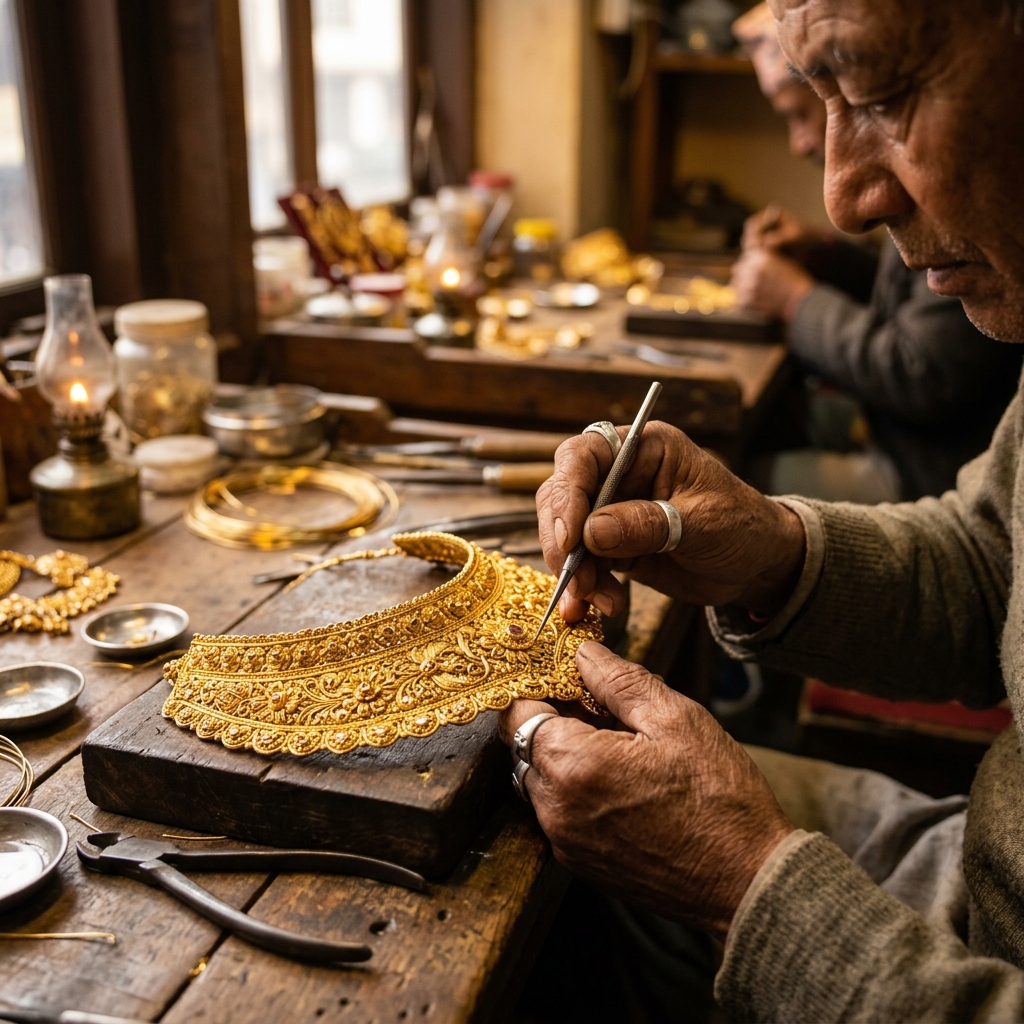
    We manufacture heritage Nepali wedding ornaments utilizing certified 22K (916) gold. Our craftsmen handcraft traditional bridal items including Tilhari, Naugedi, Jhumkas, bangles, and tikas, preserving authentic **Nepali traditional wedding jewelry design** aesthetics while strengthening structural joints.

    Modern Diamond Bridal Jewelry

    For modern ceremonies, we design custom natural diamond necklaces, tennis bracelets, drop earrings, and bridal sets. Every setting is hand-set and checked under microscopes to ensure a lifetime of security and brilliance.

    Purity Verification & Hallmarks

    Every wedding piece represents a significant investment. We stamp all gold items with official purity hallmarks and supply GIA grading reports for diamond selections, ensuring absolute transparency from our Kathmandu factory straight to your wedding day.

    Sulav Sharan KC
    GIA Graduate Gemologist & Your Trusted Guide

    Sulav Sharan KC is a GIA Graduate Gemologist dedicated to helping clients source GIA certified loose diamonds and design bespoke engagement rings. P.S. Still confused? Ask your jeweler to show you gold side-by-side. Seeing is believing!

  • Jewelry Manufacturer Kathmandu | GIA-Certified | Rashova

    Jewelry Manufacturer Kathmandu | GIA-Certified | Rashova
    Jewelry Manufacturer Kathmandu | GIA-Certified | 40+ Years | Rashova
    Rashova Diamonds • Kathmandu

    Kathmandu’s Most Trusted Jewelry Manufacturer for 40+ Years

    Serving 500+ retail partners across Nepal. GIA-certified diamonds and precision-crafted gold jewelry. Buy direct from the manufacturer in Kathmandu for better margins and faster delivery.

    40+
    Years Manufacturing Excellence
    500+
    Retail Partners in Nepal
    100%
    GIA-Certified Diamonds
    Why Retailers Choose Rashova

    Why Kathmandu Jewelry Retailers Trust Rashova

    In a market flooded with unverified manufacturers, Rashova stands as Kathmandu’s most established and trusted jewelry supplier. We’ve spent 40 years building relationships with retailers across Nepal.

    Local Presence, Global Quality

    We’re based right here in Kathmandu, serving retailers in Thamel, Basantapur, Patan, and beyond. Our 40+ year presence means we understand your market.

    • Quick consultations in person or online
    • Fast local delivery
    • Direct relationship with factory owners

    GIA Certification & Transparency

    Every diamond is certified by the Gemological Institute of America. Complete documentation with each order builds customer trust.

    • 100% GIA-certified stones
    • Full transparency on sourcing
    • Ethical practices verified

    Better Margins, Direct from Factory

    No middlemen. No distributors. You buy directly from the Kathmandu manufacturer—which means better margins for your retail shop.

    • Factory pricing to retailers
    • Bulk discounts available
    • Flexible terms for partners

    Our Kathmandu Manufacturing Capabilities

    From custom designs to bulk wholesale orders, we handle every type of jewelry manufacturing for retailers.

    Gold Jewelry Manufacturing ✓ All karats: 18K, 22K ✓ Custom designs ✓ Quick turnaround ✓ Bulk orders welcome Diamond & Gemstone Setting ✓ GIA-certified only ✓ Precision techniques ✓ Custom specifications ✓ Ethical sourcing Custom Jewelry Manufacturing ✓ Your sketches → reality ✓ Small to large orders ✓ Fast prototyping ✓ Design consultation Wholesale & Bulk Orders Bulk Orders ✓ Competitive pricing ✓ Consistent quality Fast Delivery ✓ Kathmandu-based ✓ Local shipping included

    Our Process: From Order to Your Shop

    Transparent, fast, and reliable. Here’s exactly how we work with retailers in Kathmandu.

    1 Consultation Call/WhatsApp 1-2 days 2 Design & Quote Pricing & Terms 1-2 days 3 Manufacturing Kathmandu facility 7-14 days 4 Quality Check Inspect & Certify 2 days 5 Delivery Ready for shop Local pickup From Order to Your Shop — Fast & Transparent Total timeline: 2-3 weeks for custom orders. Faster for standard designs.

    Buy Direct from the Kathmandu Manufacturer

    When you buy directly from Rashova in Kathmandu instead of through middlemen or distributors, you get better pricing, faster delivery, and a direct relationship with the factory owners. This translates into better margins for your retail shop.

    Better Wholesale Pricing — No middlemen markup

    Bulk Discounts — Order what you need, when you need it

    Custom Orders — Your designs brought to life

    Quick Turnaround — Kathmandu-based, fast delivery

    Flexible Payment — Terms for established retail partners

    Direct Support — Talk to factory owners, not salespeople

    Why Buy Direct From Rashova Factory ↑ Better Margins No middlemen Direct pricing Bulk Discounts Order what you need No minimum order Custom Designs Your design brought to life quickly Quick Turnaround Kathmandu-based Fast delivery ✓ Factory direct = Better profit for your retail shop

    Quality You Can Trust

    GIA Certification

    Every diamond we supply is certified by the Gemological Institute of America—the gold standard for diamond authentication worldwide.

    • Complete documentation with each order
    • Customers can verify authenticity
    • Transparent sourcing details

    40+ Years of Excellence

    Since 1984, we’ve maintained consistent quality standards and earned the trust of Kathmandu’s retail community. Our reputation is built on reliability.

    • Proven track record with retailers
    • Consistent quality across batches
    • 40+ years of local presence

    Ethical Sourcing

    We’re committed to responsible manufacturing. All diamonds are conflict-free, all gold is responsibly sourced, and all labor is fair.

    • Conflict-free diamonds only
    • Responsible gold sourcing
    • Fair labor practices verified

    Serving Jewelry Retailers Across Kathmandu

    Whether you’re in Thamel’s bustling tourist district, Basantapur’s traditional jewelry hub, or anywhere else in the Kathmandu Valley, Rashova is your local manufacturing partner. We know the market, understand your customers, and deliver what you need.

    Thamel

    Basantapur

    Patan

    New Road

    Kamaladi

    Kathmandu Valley

    Start Your Partnership With Rashova Today

    Join 500+ Kathmandu retailers who are growing their business with Rashova’s manufacturing excellence, competitive pricing, and reliable service.

    First-time wholesale buyer? We’ve helped hundreds of Kathmandu retailers get started. Call us for a free consultation on jewelry wholesale, custom manufacturing, and how to maximize your margins.
    Related Keywords
    • Jewelry Manufacturer Kathmandu
    • Jewellery Manufacturer Kathmandu
    • Diamond Jewelry Manufacturer Kathmandu
    • Gold Jewelry Manufacturer Kathmandu
    • Custom Jewelry Manufacturer Kathmandu
    • Jewelry Factory Kathmandu
    • Jewelry Production Kathmandu
    • Jewelry Supplier Kathmandu
    • Best Jewelry Manufacturer in Kathmandu
    • Wholesale Jewelry Kathmandu
  • The Chemistry of Custom Gold Jewelry

    The Chemistry of Custom Gold Jewelry
    The Metallurgy of Gold | Yellow, White, & Rose Gold Durability

    The Chemistry of Custom Gold Jewelry

    Pure gold (24 karat) is chemically element number 79, known for its rich yellow luster and extreme density. However, in its pure state, gold is exceptionally soft and malleable, scoring only a 2.5 on the Mohs hardness scale. For custom jewelry designs—especially settings with delicate prongs holding precious diamonds—using pure gold is structurally impossible. It would easily warp, bend, or lose gemstones under daily wear.

    To overcome this, manufacturing goldsmiths blend pure gold with solid transition metals to form karat gold alloys. This process of alloying alters the molecular lattice structure, dramatically increasing tensile strength and hardness while introducing a beautiful range of color palettes.

    Karat Weight and Purity Benchmarks

    The “karat” (K) scale represents the fraction of pure gold out of 24 parts. Thus, the percentage of gold in any alloy is calculated as (K / 24) * 100. In premium custom manufacturing, two core benchmarks are utilized:

    • 18 Karat (75% Pure Gold): Prized for its rich, heavy density and visual prestige. It contains 75% pure gold combined with 25% alloyed metals.
    • 14 Karat (58.3% Pure Gold): Offers a hard, highly durable structure with great scratch resistance. It contains 58.3% pure gold and 41.7% alloyed metals.

    Alloy Compositions Compared

    The specific metals combined with pure gold dictate both the color tint and the structural durability of the resulting creation:

    Gold Type Pure Gold % Primary Alloy Composition Hardness (Vickers HV) Key Durability Advantage
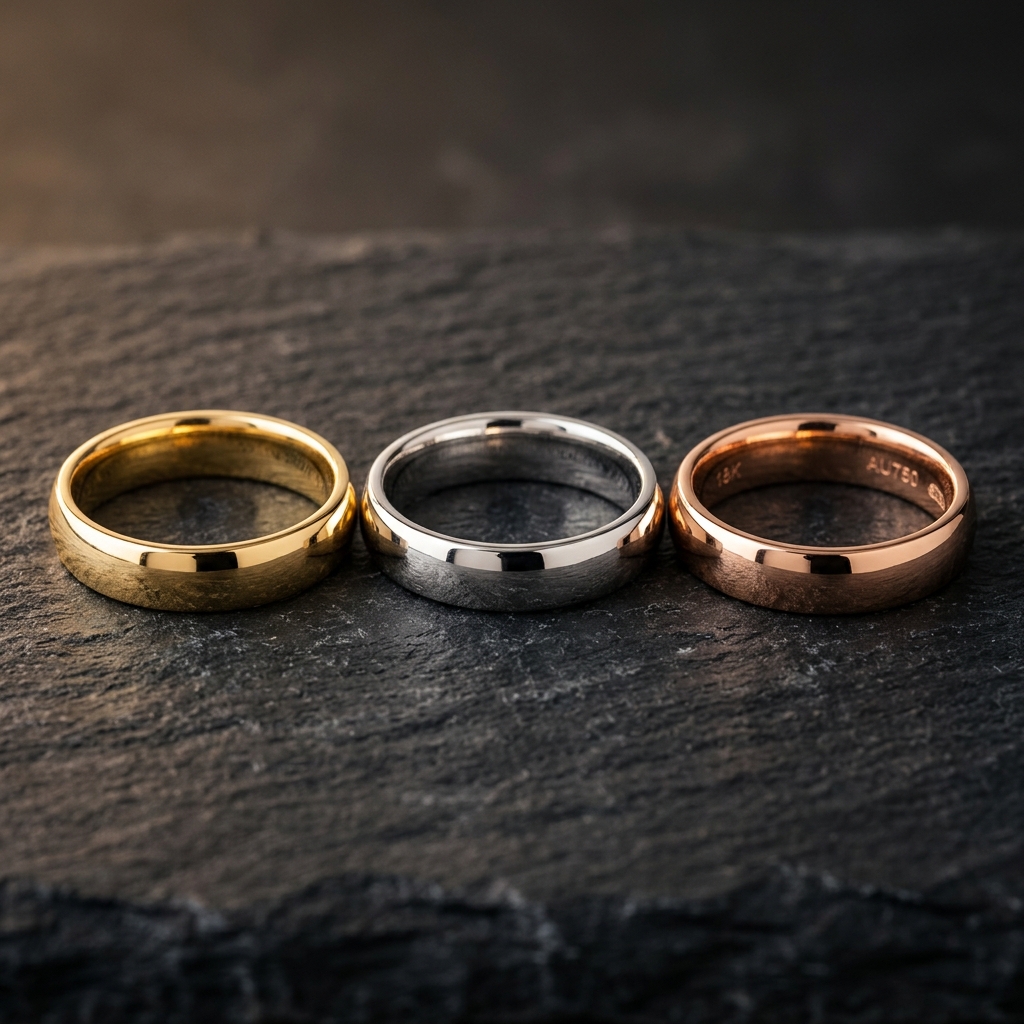
    Yellow Gold 75% (18K) / 58.3% (14K) Silver, Copper, Zinc 120 – 150 Hypoallergenic, easy to resize and polish.
    White Gold 75% (18K) / 58.3% (14K) Palladium, Silver, Nickel, Zinc 160 – 210 Highest surface hardness, rhodium protective layer.
    Rose Gold 75% (18K) / 58.3% (14K) Copper, Silver (minor ratio) 140 – 170 High tensile strength, no replating needed.

    1. Yellow Gold: The Classic Alloy

    Traditional yellow gold alloys are made by mixing pure gold with equal parts silver and copper, along with a small percentage of zinc. Zinc acts as a deoxidizer, preventing gas bubbles during casting. This blend preserves the warm, traditional golden tone. Because copper and silver have relatively soft crystal grids, yellow gold is the softest of the three gold variations. It scratches more easily but is the most malleable, allowing for detailed hand-engraving and easy resizing.

    2. White Gold: The Hardest Surface

    To create white gold, the natural yellow tint of gold must be bleached. Goldsmiths mix pure gold with strong white metals like palladium, silver, and nickel. In custom settings, palladium is the premium choice for white gold alloys, creating a clean gray metal base. White gold is the hardest of the alloys due to the high strength of palladium and nickel.

    Note on Rhodium Plating: To achieve a bright mirror-like finish, all white gold creations are electroplated with a thin micro-layer of Rhodium (a metal from the platinum family). Rhodium scores an 8 on the Mohs hardness scale, acting as a shield against scratches. This plating will wear off over time and require a quick replating service every 12 to 24 months to maintain its brilliance.

    3. Rose Gold: High Tensile Strength

    Rose gold—sometimes called pink or red gold—is alloyed using a high concentration of copper. The coppery red tint blends with the yellow gold to create a warm pink hue. Copper is one of the toughest metals used in jewelry alloys, giving rose gold extremely high tensile strength and making it less prone to scratching or bending compared to yellow gold. Additionally, because it has no surface plating, rose gold will never change color or require replating.

    Selecting the Right Karat for Custom Designs

    When placing B2B orders or designing blueprints for clients, selecting the right alloy composition is critical:

    • For High-Wear Items (Engagement Rings & Bands): Rose gold or White gold offers the best protection for prongs holding large center stones. The hardness of these alloys ensures prongs do not easily pull back or wear down.
    • For Intricate Filigree & Earrings: Yellow gold provides the malleability required to twist and shape delicate gold wires without fracturing the metal.
  • Custom Diamond Ring Manufacturer in Nepal

    Custom Diamond Ring Manufacturer in Nepal
    Custom Diamond Ring Manufacturer & Loose Diamonds Nepal | Rashova Diamonds
    Bespoke Rings & Sourcing

    Custom Diamond Ring Manufacturer & Loose Diamonds

    By Sulav Sharan KC GIA Graduate Gemologist

    An engagement ring is a lifelong symbol of love, demanding structural durability and visual brilliance. Finding a reliable production partner to source authenticated diamonds and execute clean hand settings is key. Partnering with a dedicated **diamond ring manufacturer in Nepal** offers access to conflict-free, GIA-graded gemstones and expert artisan manufacturing. In this guide, we discuss our bespoke ring building process, setting options, and loose diamond services in Kathmandu.

    Custom Diamond Ring and Loose Diamonds - Rashova Diamonds Nepal
    Bespoke Diamond Engagement Ring & Certified Loose Diamonds Sourcing

    GIA Certified Loose Diamonds in Nepal

    At Rashova Diamonds, we maintain a curated inventory of **GIA certified loose diamonds in nepal**. Sourced under strict ethical guidelines, every natural diamond is inspected and verified by our in-house gemologists. Whether you are looking for specific carat weights, color ranges, or clarity grades, we provide showrooms and individual buyers with certified loose diamonds in Kathmandu to match their requirements.

    Loose Diamond Selection:

    We source loose diamonds in round brilliant, oval, emerald, cushion, and pear cuts. Each center stone is accompanied by its corresponding GIA grading certificate report for absolute quality assurance.

    Bespoke Engagement Ring Manufacturing

    As a leading **diamond engagement ring manufacturer in nepal**, we design and manufacture custom rings from concept sketches to finished settings. We work in 18K and 22K gold, as well as platinum, ensuring every ring is built to support its specific stone geometry:

    Bespoke Engagement Rings Kathmandu

    Visit our Kathmandu studio for a personalized design consultation. We build unique, **custom diamond jewelry in nepal** tailored to your preferences, including classic solitaire settings, high-luster halos, three-stone bands, and delicate pavés.

    Production Quality Standards

    • Structural Integrity: Post thickness and prongs are engineered by hand to secure diamonds of all shapes and sizes.
    • Secure Settings: Master setting techniques (micro-prong, bezel, tension) executed under microscope alignment.
    • Polishing & Hallmarking: Meticulous multi-stage hand polish and official assay hallmarks confirming gold purity.
    Sulav Sharan KC
    GIA Graduate Gemologist & Your Trusted Guide

    Sulav Sharan KC is a GIA Graduate Gemologist dedicated to helping clients source GIA certified loose diamonds and design bespoke engagement rings. P.S. Still confused? Ask your jeweler to show you gold side-by-side. Seeing is believing!

  • Wholesale Jewelry Supplier & Manufacturer

    Wholesale Jewelry Supplier & Manufacturer
    Wholesale Gold & Diamond Jewelry Supplier Nepal | Rashova Diamonds
    Wholesale & Business Supply

    Wholesale Jewelry Supplier & Manufacturer

    By Sulav Sharan KC GIA Graduate Gemologist

    Sourcing inventory for retail boutiques, jewelry showrooms, or expanding business operations demands consistency, certified purity, and reliable supply partners. Choosing a dedicated **wholesale jewelry manufacturer in Nepal** grants access to certified gold standards and natural GIA diamonds. In this guide, we break down our wholesale structures, custom manufacturing services, and secure transport policies designed for local jewelry buyers and retail stores across Nepal.

    Wholesale Jewelry Display - Rashova Diamonds Nepal
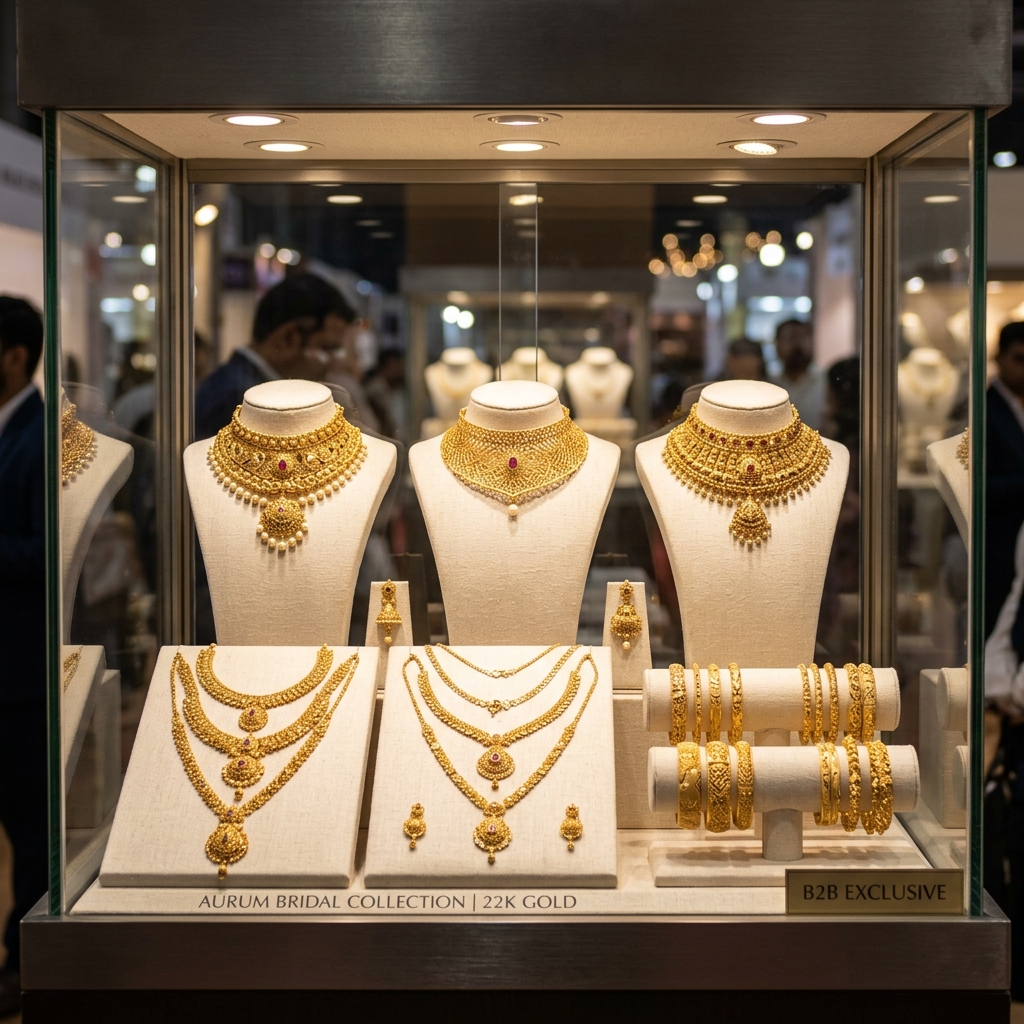
    B2B Wholesale Gold & Diamond Jewelry Showroom Display

    Your Trusted B2B Jewelry Supplier in Nepal

    Whether you are expanding your showroom catalog or seeking a contract manufacturer for seasonal collections, partnering with a certified **jewelry supplier in Nepal** ensures compliance with strict quality standards. We offer custom manufacturing and distribution for fine jewelry, operating as a leading **gold jewelry supplier in Nepal** and **diamond jewelry supplier in Nepal**.

    Wholesale & Bulk Supply Capacities:

    We supply loose natural diamonds, blank semi-mount settings, and finished fine jewelry. All bulk orders include certified hallmarking and official assay documentation to guarantee metal purity.

    Wholesale Sourcing Frameworks

    We offer customized supply structures to support retail distribution networks across Nepal, acting as your trusted **diamond jewelry wholesaler nepal** and core partner for **jewelry wholesale in Nepal**:

    Gold Jewelry Wholesale

    Order custom gold chains, bands, bracelets, and traditional bridal collections in 18K, 14K, and 22K gold. Our **gold jewelry wholesale nepal** service provides flexible ordering, volume-based pricing, and custom hallmarks stamped with your brand logo.

    Diamond Jewelry Wholesale

    Source high-end natural diamond jewelry, including solitaires, wedding sets, tennis bracelets, and diamond earrings. Our **diamond jewelry wholesale nepal** catalog features hand-selected diamonds certified by GIA Graduate Gemologists.

    Secure Local Logistics & Transit

    Safe and reliable transit of high-value goods is essential for retail business. We manage transit security and secure logistics from our Kathmandu factory to retail partners nationwide:

    • Fully Insured Local Transit: Secure hand-delivery options in Kathmandu, Lalitpur, and Bhaktapur.
    • Protected Regional Logistics: Partnered with high-security domestic transit networks for deliveries to Pokhara, Biratnagar, Butwal, and other major cities.
    • Assay Verification: Every package is sealed with corresponding GIA certificates and hallmarked purity tags, ensuring verified transfer from our workshop to your showroom.
    Sulav Sharan KC
    GIA Graduate Gemologist & Your Trusted Guide

    Sulav Sharan KC is a GIA Graduate Gemologist dedicated to helping clients source GIA certified loose diamonds and design bespoke engagement rings. P.S. Still confused? Ask your jeweler to show you gold side-by-side. Seeing is believing!

  • Certified Gold Diamond Jewellery Production in Nepal

    Certified Gold Diamond Jewellery Production in Nepal
    GIA Certified Gold & Natural Diamond Jewelry Manufacturer Nepal | Rashova Diamonds
    Certified Manufacturing

    Certified Gold & Natural Diamond Jewelry Production

    By Sulav Sharan KC GIA Graduate Gemologist

    Fine jewelry is defined by the quality of its components and the authenticity of its sourcing. Sourcing genuine, ethically mined natural diamonds and certified gold alloys can be a challenge in the B2B sector. Partnering with a reliable **natural diamond jewelry manufacturer in Nepal** offers access to conflict-free gemstones and certified manufacturing standards. Below, we break down our quality standards, GIA grading policies, and custom setting services.

    GIA Certified Diamond Ring - Rashova Diamonds Nepal
    GIA Graded Engagement Ring & Fine Diamond Jewelry Sourcing

    Sourcing Ethically Mined Natural Diamonds

    At Rashova Diamonds, we prioritize absolute transparency. We guarantee that every diamond used in our production is a natural, ethically mined gemstone. As a trusted **certified diamond jewelry Nepal** supplier, we adhere strictly to the Kimberley Process, ensuring conflict-free sourcing for all of our B2B partners and retail clients.

    GIA Certified Diamond Sourcing:

    Our diamond inventory is managed by GIA Graduate Gemologists. Every center stone is accompanied by a unique GIA Grading Report, confirming its Carat weight, Color, Clarity, and Cut quality.

    State-of-the-Art Diamond Jewelry Factory

    Our modern **diamond jewelry factory in Nepal** combines traditional hand craftsmanship with rigorous quality controls. We manage custom wholesale projects and private label orders for global export, specializing in:

    Diamond Engagement Rings & Bands

    As a leading **diamond ring manufacturer in Nepal** and **diamond engagement ring manufacturer in Nepal**, we design custom bridal sets, solitaire mountings, halo settings, and three-stone rings. Every setting is engineered to highlight the natural light performance and brilliance of the diamond.

    Wholesale Diamond Jewelry Production

    We serve international retailers and brands as a dedicated **diamond jewelry wholesaler nepal** partner. Our wholesale capabilities include diamond earrings, pendants, tennis bracelets, and custom signature collections, made to your exact karat and budget requirements.

    BIS Certified Purity & Hallmarking

    Every gold jewelry item produced in our Kathmandu workshop is stamped with certified hallmark codes indicating exact karat and alloy composition. This guarantees that our 22K (916) and 18K (750) gold jewelry meets strict international assay guidelines.

    Sulav Sharan KC
    GIA Graduate Gemologist & Your Trusted Guide

    Sulav Sharan KC is a GIA Graduate Gemologist dedicated to helping clients source GIA certified loose diamonds and design bespoke engagement rings. P.S. Still confused? Ask your jeweler to show you gold side-by-side. Seeing is believing!